
Mad Smash
Gimica GmbHCasual
3.95.53K Reviews
- Version
- 1.11.1
- Installs
- 5.00M
- Age Rating
- Everyone
Screenshots
Our Review of Mad Smash
 Analysis by Appyee
I went into Mad Smash expecting a quick, disposable arcade game, and that is mostly what I found: a simple casual game built around breaking downward through a tower while avoiding blocks that can interrupt the run. Its appeal is immediate rather than deep. You understand the central idea almost at once, and the game is easy to pick up when you have a spare minute.
My overall view is positive, but measured. The game works best as a short burst of concentration, not as a long-term replacement for a richer arcade or puzzle title. Its clean premise, free entry point, and Everyone age rating make it approachable, while the repeated nature of the action means some players will reach its limits quickly. If you like fast restarts and uncomplicated goals, it is worth trying. If you need a lot of variety, story, or strategic development, I would look elsewhere.
Why the downward smash is so easy to understand
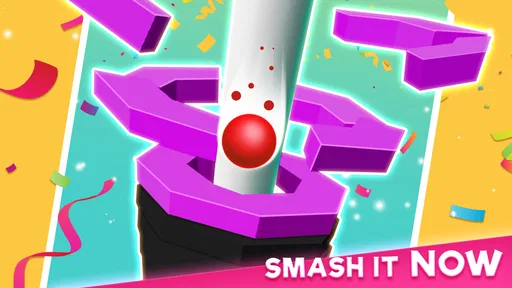
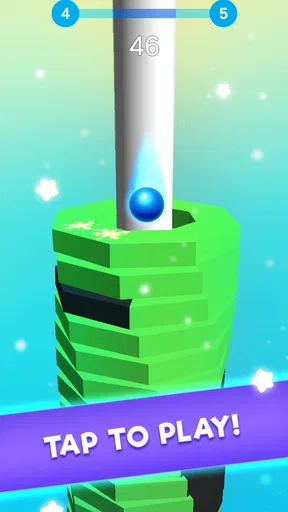
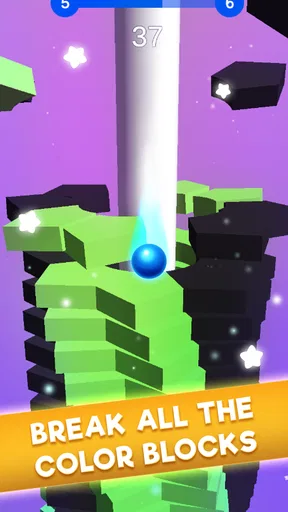
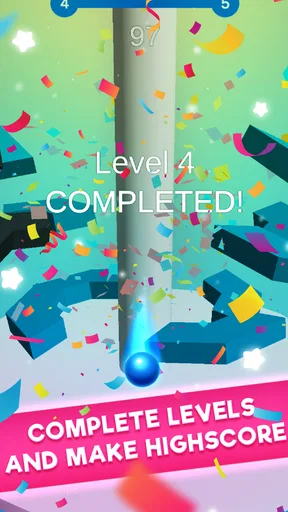
The strongest part of the design is its clarity. The store summary describes smashing down a tower and watching for blocks, and that basic relationship is the entire reason the game is accessible. There is no lengthy setup to learn before the first attempt. You see the route, react to what is in front of you, and try to keep the descent going.
That simplicity matters on a phone. I can imagine opening it while waiting for transport, taking a short break from work, or handing it to someone who does not normally play mobile games. The controls and objective are not wrapped in complicated menus or an elaborate fictional world. The game asks for attention immediately, then lets me decide whether I want another attempt.
It is also a useful example of why casual games do not need an enormous feature list to be effective. The central action gives the player a small, understandable challenge: move through the tower, avoid the dangerous blocks, and see how far the run can continue. That creates a natural rhythm of attempt, mistake, restart, and improvement.
In my experience, this kind of structure is more satisfying when I treat each session as a personal test rather than expecting a major progression system. I am not opening it to explore a world or complete a long campaign. I am opening it because I want something direct that can occupy a few minutes without demanding preparation.
The best moments come from controlled risk
The game becomes more interesting when I stop treating every opening as an invitation to rush. A fast descent may feel exciting, but watching the blocks and choosing when to commit is usually the better habit. That creates a small trade-off between speed and caution: moving aggressively keeps the action lively, while pausing long enough to read the route reduces careless failures.
One practical tip is to focus on the next safe decision instead of trying to predict the entire tower. Looking too far ahead can make a simple obstacle feel more complicated than it is. I get better results by checking the immediate path, making the move, and then reassessing the new section. That approach is especially helpful when I am playing one-handed or while distracted by the surroundings.
Another useful habit is to use early attempts as reconnaissance. A failed run is not only a loss; it shows how quickly the tower demands a reaction and which visual cues deserve attention. Rather than repeating the same rushed movement, I can change one behavior at a time: slow down before a crowded section, watch the block position more carefully, or avoid making a move simply because it looks available.
These are small observations, but they are what give the game more substance than its short description suggests. The mechanics remain simple, yet the player can still improve through timing and restraint. That is enough to make several brief sessions feel purposeful, especially when I am trying to beat my own previous performance.
Where it fits among casual mobile games
Compared with match-three games, Mad Smash is less about building combinations or planning several moves in advance. Compared with endless runners, it puts more emphasis on reading the immediate route than on memorizing a continuous stream of hazards. It also feels more direct than casual games that surround a small mechanic with collections, characters, missions, or decorative upgrades.
That narrow focus is both its identity and its limitation. Players who enjoy a compact reflex challenge may appreciate the lack of clutter. Players who expect daily tasks, a campaign, social competition, or a large collection of unlockables may find the experience thin. I would not choose it over a deeper puzzle game when I want to think through a complex board, and I would not choose it over a story-driven game when I want a sense of progression.
The comparison with endless runners is particularly useful. A runner often encourages a constant forward rhythm, while this game rewards paying attention to the blocks in the descent. That difference makes it feel less like a test of endurance and more like a sequence of short decisions. It is still accessible, but it asks for a different kind of concentration.
For a phone shared with family members, the Everyone rating is helpful. The premise is easy to explain, and the game does not require a specialist interest in games. Still, the rating should not be confused with universal appeal. Younger players may enjoy the immediate smashing action, while older players who prefer more layered goals may only play it occasionally.
What works well in everyday use
The free price lowers the barrier to trying it. I do not have to make a commitment before discovering whether the descending-tower idea suits me. That is important for a small casual game, because its value depends heavily on personal tolerance for repetition. A free download lets me test the loop during a short break instead of judging it from screenshots or a description alone.
Its short-session design is also convenient. I can play a run, put the phone away, and return later without needing to remember a complicated plot or recover a long chain of objectives. This makes it a reasonable choice for waiting rooms, queues, or the few minutes before an appointment. The game has a clear beginning and end to each attempt, which is more practical than a mode that expects a long uninterrupted session.
There is a useful psychological advantage in the restart loop. When a run ends because I misread a block, the next attempt feels close at hand. That can encourage improvement without requiring a large time investment. I can experiment with a safer approach, notice whether it helps, and stop after a handful of tries if I am no longer enjoying the challenge.
The game also works as a low-pressure introduction to mobile arcade play. Someone unfamiliar with touch games can understand the goal without studying a manual. I would be comfortable recommending it to a friend who wants something more active than a passive time-killer but less demanding than a full puzzle or action game.
From a technical compatibility perspective, the game supports Android versions from 7.0 onward. That gives it a practical advantage for people using older compatible devices rather than only the newest phones. The current version is 1.11.1, and the title has been available since December 3, 2021, so it is not a brand-new experiment with no history of availability.
Its reach is substantial: it has passed five million installs, alongside an average rating of 3.9 from around seventy-seven thousand ratings and about five thousand five hundred written reviews. I do not treat popularity as proof that a game is excellent, but those figures suggest that the basic concept has attracted a sizeable audience and is easy enough for many people to approach.
The friction I would want players to understand
The main weakness is repetition. Once the novelty of smashing downward has worn off, the experience depends on whether the obstacle-reading loop remains satisfying for you. I enjoyed the quick decisions, but I can also see myself reaching a point where another run feels too similar to the last one. The game is better at delivering a focused moment than at sustaining a broad, evolving adventure.
That limitation becomes more noticeable for players who need visible long-term goals. If your favorite casual games give you a growing collection, a sequence of stages with different themes, or a strong sense of completion, this may feel underdeveloped by comparison. I would not recommend installing it with the expectation that the central mechanic will transform into a much larger genre experience.
There is also a risk of frustration when a mistake happens during a fast attempt. The straightforward design leaves little room for excuses: if I move too quickly or fail to watch the blocks, the run ends because of that decision. Some players will find this fair and motivating. Others may feel that the action becomes repetitive before their interest in improving has had time to grow.
The free model deserves a little attention as well. The game is free to play, with in-app purchases ranging from $0.99 to $4.49 per item. That does not automatically make the purchase system a problem, but I would approach any optional spending carefully. For a game whose main value is a compact repeatable loop, I would first decide whether I genuinely enjoy the core action before paying for extras.
My advice is simple: install it, play without spending, and judge the experience by how often you voluntarily want to restart. If the first sessions feel engaging because you are learning the timing, that is a good sign. If they already feel like the same attempt repeated, purchases are unlikely to solve the underlying issue, because the limitation is the narrowness of the main loop rather than the price of entry.
Who should try it and who should skip it
I think Mad Smash is a good match for players who enjoy arcade games that explain themselves quickly. It suits people who like reacting to obstacles, chasing a better personal result, and playing in short bursts. It is also a sensible option for families looking for an accessible casual title, provided everyone understands that the game is built around repetition rather than a substantial narrative or progression system.
It may be particularly useful for someone who wants a small mental reset between tasks. For example, after finishing a difficult email, I could play a few attempts during a coffee break, concentrating on the next block instead of thinking about work. Because each run is self-contained, I would not need to reserve a full evening or worry about losing track of a complicated objective.
I would skip it if my priority were deep strategy. The game may reward better observation and timing, but it does not replace a board-based puzzle where every move can be planned several steps ahead. I would also skip it if I wanted a rich competitive environment, a story, or a large set of activities. In those situations, a more feature-heavy casual game would offer better value for my attention.
Players who dislike restarting may want to be cautious. The appeal depends on accepting that a mistake leads naturally to another attempt. That loop can be satisfying when I am in the mood for improvement, but it can feel annoying when I want steady progress with fewer interruptions. Knowing which mood I am in makes a bigger difference here than the game’s broad casual label might suggest.
The developer, Gimica GmbH, has positioned the title around a very readable arcade idea rather than an intimidating control scheme. That is a strength for accessibility, but it also means experienced mobile players should keep expectations realistic. The game does not need to be complex to be enjoyable; it simply needs to hold your attention through its timing challenge. Whether it succeeds depends on how much pleasure you get from refining a small skill.
My verdict after spending time with the tower
I recommend Mad Smash as a free, easy-to-learn casual game for short sessions, with one important condition: you should enjoy repetition and personal improvement. The downward smashing concept is clear, the block-avoidance challenge gives each attempt a purpose, and the low entry cost makes experimentation painless. I like that I can understand the objective immediately and still find room to improve my decisions after the first few tries.
At the same time, I would not present it as a complete arcade package. Its narrow loop can lose freshness, especially for players who expect varied modes or a strong progression structure. The in-app purchase range is another reason to stay selective: I would only consider spending after confirming that the basic experience genuinely fits my habits.
The game’s 3.9 average shows a generally favorable reception without suggesting that it will satisfy everyone. That feels fair to me. It is approachable, focused, and convenient, but its simplicity will be a strength for some players and a weakness for others. I would recommend trying it during a spare moment rather than promising yourself a long-term favorite.
My final recommendation is to download it if you want a quick reflex challenge with a clear goal and easy restarts. Give it a chance when you need a brief distraction, use the early attempts to learn the safest rhythm, and avoid treating purchases as a substitute for variety. For a compact casual game, that is where Mad Smash is at its best: a small, readable challenge that asks me to watch carefully, react decisively, and try once more when I get it wrong.
Verdict
Strengths of Mad Smash
- Fast-paced matches are ideal for short gaming sessions.
- Simple controls make it easy for new players to get started.
- Bright visuals give the game a lively, arcade-style atmosphere.
- Unlockable content adds motivation to keep playing.
- Quick restarts make failed attempts feel less frustrating.
Limitations of Mad Smash
- Progress can feel repetitive after extended play sessions.
- Some challenges may depend heavily on timing and reflexes.
- The small-screen controls can feel imprecise during hectic moments.
- Limited variety may reduce long-term appeal for dedicated players.
- Ads may interrupt the experience, depending on the game version.
Other Releases by Gimica GmbH
View All


Similar Picks in This Category
View All
My Talking Angela
Outfit7 Limited4.2

My Talking Tom
Outfit7 Limited4.3

Pou
Zakeh4.2

My Talking Tom 2: Pet Game
Outfit7 Limited4.3

Candy Crush Saga
King4.6

Bridge Race
Supersonic Studios LTD4.1
Frequently Asked Questions
What is Mad Smash, and how does the game work?
Mad Smash is a fast-paced arcade game focused on breaking, smashing, or clearing targets through short interactive levels. After installing it, players can generally expect simple controls, quick challenges, and progressively harder stages designed for casual play. Its straightforward gameplay makes it easy to start, although mastering timing, accuracy, and level objectives may require practice.
Is Mad Smash free to download and play?
Mad Smash can typically be downloaded without an upfront payment, allowing users to try the main gameplay before spending money. However, availability of optional in-app purchases, advertisements, extra lives, boosters, cosmetic items, or other premium content may vary depending on the version and platform. It is advisable to review the store listing and purchase settings before playing.
Does Mad Smash require an internet connection?
The basic levels of Mad Smash may be playable offline, which is convenient for short sessions while traveling or when mobile data is unavailable. Nevertheless, some functions can require an internet connection, including advertisements, purchases, updates, online rankings, cloud synchronization, or promotional events. Players should launch the game both online and offline to confirm which features remain accessible.
Is Mad Smash suitable for children and family play?
Mad Smash is generally easy to understand because its gameplay relies on quick actions rather than complicated instructions. Even so, parents should check the age rating, advertising content, privacy information, and in-app purchase options shown on the Google Play Store or Apple App Store. Younger children may also need supervision if the game includes frequent ads or purchase prompts.
What should I check before downloading Mad Smash?
Before downloading Mad Smash, check that your Android or iOS device meets the required operating-system version and has enough free storage for the installation and future updates. You should also review recent user feedback, permissions, privacy practices, advertising details, and whether progress is saved through an account or only on the device. These checks can help prevent compatibility or data-loss issues.
Play our best games!


